Book Appointment Now
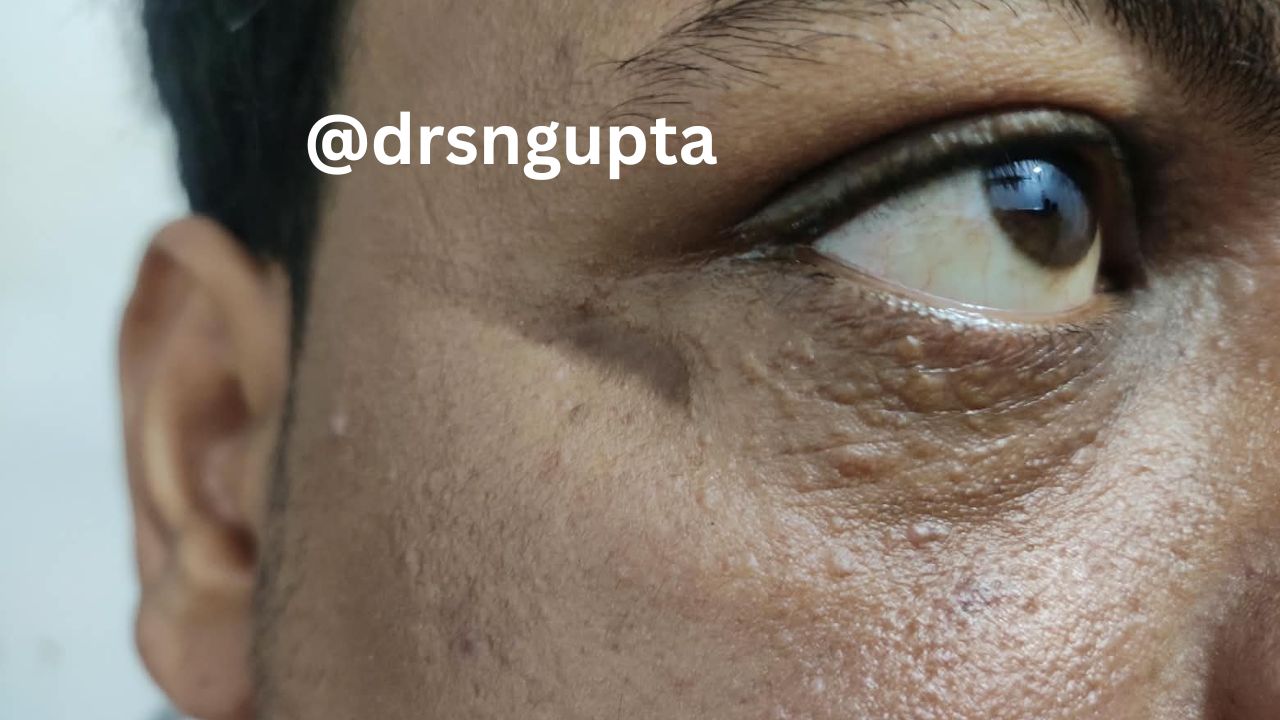
Syringoma
Syringoma is a benign (non-cancerous) skin condition characterized by small, firm bumps that develop due to the overgrowth of cells in the eccrine sweat ducts. These growths are harmless and typically appear as flesh-colored or yellowish papules measuring 1 to 3 millimeters in diameter. While syringomas can occur anywhere on the body, they most commonly develop in clusters around the eyelids and upper cheeks, particularly in adolescent and middle-aged women.
Understanding Syringoma
Definition and Nature
A syringoma is a benign adnexal tumor derived from the acrosyringium, which is the intraepidermal portion of an eccrine sweat duct. These tumors represent an overgrowth of cells within the sweat gland ducts, resulting in visible bumps on the skin’s surface. Despite their appearance, syringomas are completely harmless and do not transform into cancerous growths.
Who Gets Syringoma?
Syringomas can affect anyone, but certain demographics show higher prevalence:
- Gender: Women are more commonly affected than men
- Age: Typically appears during puberty or young adulthood, though can occur at any age
- Ethnicity: More common in individuals with Asian ethnicity and darker skin types
- Genetic predisposition: Family history increases risk
Types of Syringoma
Medical literature recognizes four principal clinical variants of syringoma, as classified by Friedman and Butler
1. Localized Syringoma
This is the most common form, typically presenting as multiple small bumps clustered around the eyelids and upper cheeks. These lesions usually appear symmetrically on both sides of the face and remain confined to this periorbital region.
2. Generalized (Eruptive) Syringoma
This rare variant presents as successive crops of small flesh-colored papules appearing on multiple body areas. Common locations include:
- Anterior chest
- Abdomen
- Neck
- Arms
- Upper body
Eruptive syringomas appear in waves, with periods of active eruption followed by relief periods. This form generally occurs during the peripubertal period and is seen mainly in women.
3. Familial Syringoma
This hereditary form exhibits an autosomal dominant pattern of inheritance, meaning it can be passed from biological parents to children. Key characteristics include:
- Often arises before puberty onset
- Commonly affects the face
- More prevalent in females
- Linked to chromosome 16q22
4. Down Syndrome-Associated Syringoma
Individuals with Down syndrome (trisomy-21) have a significantly increased incidence of syringomas, affecting 18–39% of this population. These lesions typically appear around the eyelids and may be more numerous than in the general population.
Causes and Risk Factors
Primary Cause
Syringomas develop when cells in the eccrine sweat ducts grow excessively, creating small tumors. The exact mechanism triggering this overgrowth remains unclear, though several theories exist.
Contributing Factors
Genetic Factors:
- Hereditary component in familial cases
- Autosomal dominant inheritance pattern
- Chromosome 16q22 involvement
Medical Conditions:
Several conditions are associated with increased syringoma risk:
- Down syndrome
- Diabetes mellitus
- Marfan syndrom
- Ehlers-Danlos syndrome
- Brooke-Spiegler syndrome
- Nicolau–Balus syndrome
- Hyperthyroidism
Environmental and Lifestyle Triggers:
Activities and conditions that increase sweat gland productivity may contribute to syringoma development:
- Exercise and physical activity.
- Stress
- High temperatures and heat exposure
- Hormonal changes (particularly during puberty)
- Inflammatory reactions to autoimmune conditions
- Trauma from radiation, waxing, or heat stimuli
- Anti-epileptic medications.
Symptoms and Clinical Presentation
Physical Appearance
Syringomas present with distinctive characteristics:
- Size: Small bumps measuring 1 to 3 millimeters in diameter.
- Color: Flesh-colored, yellowish, or translucent.
- Texture: Firm, smooth, and round.
- Distribution: Typically occur in symmetrical clusters
- Location: Most commonly around eyes, upper cheeks, neck, chest, and abdomen.
Sensory Symptoms
Most syringomas are asymptomatic and cause no discomfort. However, some individuals may experience:
- Mild itching, especially when sweating
- Occasional irritation
- Pruritus (itching) in some eruptive cases
Psychological Impact
While physically harmless, syringomas can induce psychological stress when they are:
- Large or numerous.
- Disfiguring.
- Located in visible or delicate regions like the periorbital area.
Diagnosis
Clinical Examination
Diagnosis typically begins with a visual examination by a dermatologist or healthcare provider. The characteristic appearance, location, and distribution of the lesions often provide strong diagnostic clues.
Differential Diagnosis
Syringomas may be confused with other skin conditions, including:
- Milia: Small white cysts filled with keratin.
- Comedones (blackheads/whiteheads): Clogged hair follicles.
- Molluscum contagiosum: Viral skin infection.
- Xanthelasma: Yellowish cholesterol deposits around eyes.
Histopathological Confirmation
When diagnosis is uncertain, a skin biopsy may be performed. Histopathological examination reveals:
- Normal compressed eccrine ducts within fibrous stroma.
- Tubular structures with PAS-positive eosinophilic material in the lumen.
- Benign adnexal tumor characteristics
Treatment Options
Important Considerations
Since syringomas are benign and harmless, treatment is not medically necessary. Treatment is typically pursued for cosmetic reasons or when lesions cause psychological distress. It’s important to note that syringomas may recur after treatment, and complete removal isn’t always guaranteed.
Surgical and Procedural Treatments
1. Laser Therapy
Laser treatment is among the most common approaches for syringoma removal:
- CO2 Laser: The most widely used ablative laser therapy, though associated with potential adverse events
- Erbium:YAG Laser: Alternative ablative option with potentially fewer side effects
- Fractional Lasers: May offer improved healing with reduced scarring risk.
Despite various laser options, no consensus exists on optimal laser settings for syringoma treatment.
2. Electrosurgery
This technique uses electrical current to destroy the abnormal tissue. It’s effective for individual lesions but may require multiple sessions for extensive cases.
3. Cryotherapy
Freezing the lesions with liquid nitrogen can remove syringomas, though it carries risks of:
- Hypopigmentation (lightening of skin)
- Hyperpigmentation (darkening of skin)
- Scarring
4. Surgical Excision
Individual lesions can be surgically removed, particularly when few in number. This approach provides definitive removal but may leave small scars.
5. Dermabrasion
This technique involves removing the top layers of skin to reduce the appearance of syringomas. It’s less commonly used today due to the availability of more precise laser options.
Medical Management
Topical Treatments:
Some topical agents may help reduce the appearance of syringomas, though evidence is limited:
- Topical retinoids
- Atropine-containing preparations.
Systemic Medications:
In cases of widespread eruptive syringomas, oral medications may be considered:
- Isotretinoin (oral retinoid)
- Other systemic retinoids
These require medical supervision due to potential side effects.
Emerging and Alternative Treatments
Research continues into more effective and less invasive treatment options. Some approaches under investigation include:
- Combination laser therapies
- Improved fractional laser protocols
- Targeted topical formulations.
Prevention and Management
Prevention Strategies
Since the exact cause of syringomas remains unclear, complete prevention isn’t possible. However, certain measures may help reduce risk or minimize progression:
Manage Triggering Factors:
- Control excessive sweating through proper hygiene
- Manage stress levels
- Avoid excessive heat exposure when possible
- Moderate intense physical activity in hot conditions
Medical Condition Management:
- Proper control of diabetes if present;.
- Management of thyroid disorder.
- Regular monitoring if you have associated syndromes (Down syndrome, Marfan syndrome, etc.)
Skin Care:
- Gentle cleansing of affected areas
- Avoid trauma to skin (waxing, harsh treatments) in predisposed individuals.
- Use non-comedogenic skincare products
Living with Syringoma
Cosmetic Management:
For those who choose not to pursue medical treatment:
- Makeup can effectively camouflage facial syringomas
- Concealers matched to skin tone provide natural coverage
- Professional cosmetic consultation may help optimize coverage techniques
Psychological Support:
When syringomas cause emotional distress:
- Counseling or support groups may help
- Understanding the benign nature can reduce anxiety
- Focus on overall skin health rather than individual lesions
Regular Monitoring:
While syringomas don’t become cancerous, regular skin checks are advisable to:
- Monitor for any changes in existing lesions
- Detect new skin conditions early
- Ensure proper diagnosis if new growths appear
Syringoma vs. Other Skin Conditions
Syringoma vs. Milia
Both conditions present as small bumps, but differ in key ways:
- Milia: White, keratin-filled cysts; can occur anywhere; often resolve spontaneously.
- Syringoma: Flesh-colored or yellowish; sweat duct origin; typically persistent.
Syringoma vs. Comedones
- Comedones: Blackheads or whiteheads from clogged pores; associated with acne; can be extracted.
- Syringoma: Solid tumors; not related to pores; cannot be extracted.
Syringoma vs. Xanthelasma
- Xanthelasma: Yellowish cholesterol deposits; typically around eyes; associated with lipid disorders.
- Syringoma: Firm papules; sweat duct origin; not related to cholesterol.
When to See a Doctor
Consult a healthcare provider or dermatologist if you notice:
- New bumps appearing around eyes or on body.
- Existing lesions changing in size, color, or texture
- Itching, pain, or irritation developing
- Uncertainty about diagnosis
- Desire for cosmetic removal.
- Psychological distress from appearance.
Prognosis and Long-term Outlook
Syringomas are completely benign with excellent prognosis. Key points include:[healthline][medicoverhospitals]
- No cancer risk: Syringomas do not transform into malignant tumors[healthline]
- Chronic condition: Lesions typically persist without treatment[healthline]
- Recurrence possible: Treated lesions may return, especially with certain methods.
- Quality of life: Generally unaffected unless lesions are extensive or cosmetically concerning
Special Considerations
Pregnancy and Syringoma
Hormonal changes during pregnancy may influence syringoma development or progression due to increased sweat gland activity. Most treatments are deferred during pregnancy unless medically necessary.
Children and Adolescents
Syringomas commonly appear during puberty. In pediatric cases:
- Familial forms often present before puberty.
- Treatment decisions should consider psychological impact versus procedural risks
- Many dermatologists recommend waiting until lesions stabilize before aggressive treatment
Ethnic Considerations
Individuals with darker skin types and Asian ethnicity show higher prevalence of syringomas, particularly eruptive forms. Treatment approaches may need modification to minimize pigmentation changes in these populations.
Research and Future Directions
Ongoing research aims to better understand:
- Genetic basis: Identifying specific gene mutations on chromosome 16q22.
- Pathogenesis: Clarifying the exact mechanism of eccrine duct overgrowth.
- Treatment optimization: Developing more effective, less invasive removal methods.
- Prevention strategies: Understanding modifiable risk factors.
Future genetic analysis may enable identification of causative gene mutations, potentially leading to targeted therapies.

Dr. S. N. Gupta is a renowned skin specialist and dermatologist in Prayagraj, with extensive experience in diagnosing and treating various skin, hair, nail and Sexually Transmitted Diseases conditions for last 28 years. Address Shree Balaji Medical Traffic Chauraha, Rajapur Prayagraj Mob 9415613743