Book Appointment Now
Understanding Molluscum Contagiosum: Causes, Symptoms, and Effective Treatment Pathways
Molluscum contagiosum is a common, highly contagious viral skin infection that results in characteristic raised, pearl-like bumps. While it frequently affects children, it can impact individuals of all ages.
Because the lesions can look alarming and easily spread through households or communities, understanding how the virus behaves, when it requires medical attention, and what treatment options exist is key to managing the condition safely.
What is Molluscum Contagiosum?
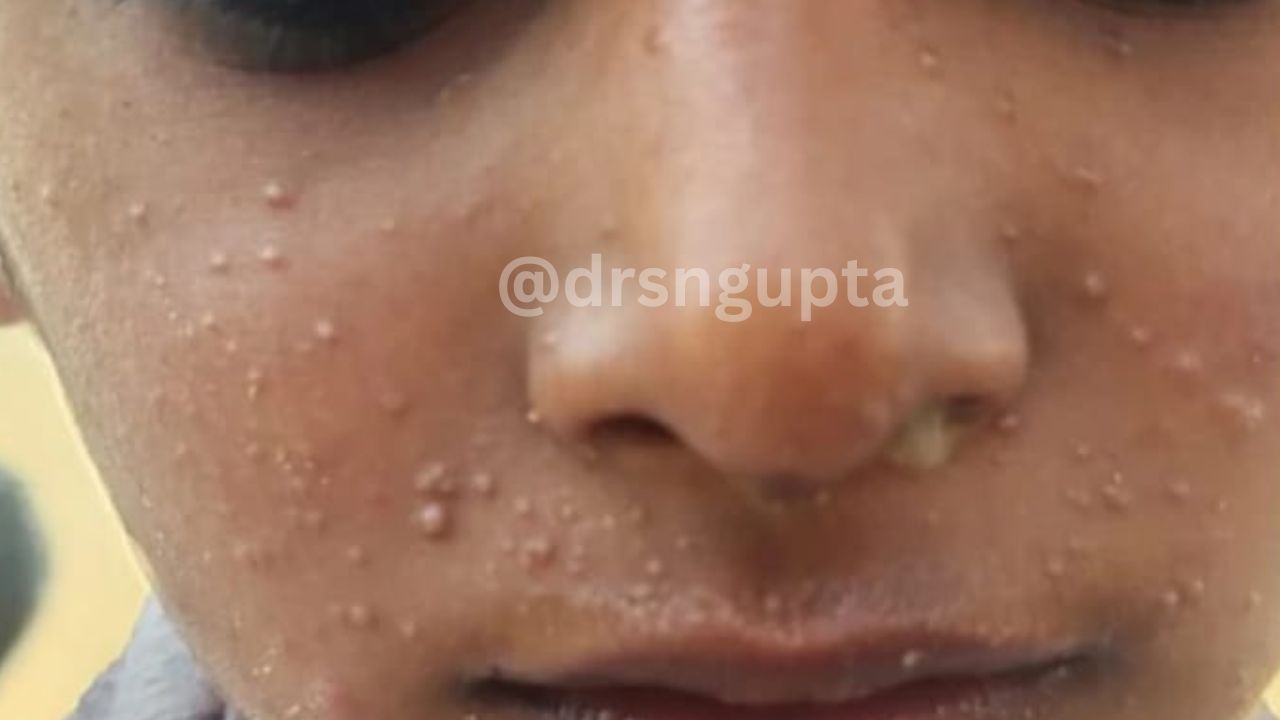
Molluscum contagiosum is caused by a poxvirus. The infection manifests as superficial skin lesions (papules) that are typically small (ranging from 2 to 5 millimeters in diameter), dome-shaped, and feature a characteristic central dimple or pit, known as umbilication.
The bumps are usually flesh-colored, white, or pink, and often contain a central, cheesy white core.
How the Virus Spreads
- Direct Skin-to-Skin Contact: The virus transmits easily through close physical contact, making it common among children playing together.
- Sexual Transmission: In sexually active adults, molluscum lesions frequently appear on the genitals, lower abdomen, or inner thighs, classifying it structurally as a sexually transmitted infection (STI) in these contexts.
- Fomites (Contaminated Objects): Sharing towels, clothing, bath sponges, or athletic equipment can facilitate transmission.
- Auto-Inoculation: Scratching or picking at a lesion can cause the virus to spread to other parts of the body, resulting in new clusters or linear rows of bumps.
Symptoms and Clinical Presentation
In otherwise healthy individuals, molluscum contagiosum is generally asymptomatic, though the lesions can occasionally become itchy, sore, swollen, or tender.
- Location: Lesions can appear anywhere on the body except the palms of the hands and the soles of the feet. In children, they commonly show up on the face, trunk, armpits, and groin.
- The Role of Eczema: Children with underlying atopic dermatitis (eczema) often experience more widespread and persistent outbreaks because compromised skin barriers allow the virus to establish itself more easily.
The Natural Course: Do You Need Treatment?
Molluscum contagiosum is a self-limited infection, meaning the body’s immune system eventually recognizes and fights off the poxvirus on its own.
- Timeline: Without medical intervention, lesions typically resolve spontaneously within 6 to 12 months, though some cases can persist anywhere from several months up to a few years.
- The “Benign Neglect” Approach: Because the condition clears on its own without leaving scars if left undisturbed, major medical organizations (including the American Academy of Dermatology) often recommend observation as a primary strategy for healthy children.
However, treatment may be pursued if the lesions cause significant discomfort, risk spreading in crowded environments like schools or daycare centers, lead to social stigmatization, or occur in immunocompromised patients.
Modern Medical Treatments
When treatment is indicated, a board-certified dermatologist can utilize a range of in-office procedures or prescription at-home therapies.
1. In-Office Procedural Treatments
- Cantharidin (“Beetle Juice”): A plant-derived blistering agent applied carefully to individual bumps by a clinician. It creates a painless blister underneath the lesion, lifting the virus off the skin as it heals over 1 to 2 weeks. Standardized formulations like VP-102 have improved precision and safety profiles.
- Cryotherapy: Freezing individual lesions using liquid nitrogen. Because this can cause temporary stinging or pigment changes, it is typically reserved for older children and adults.
- Curettage: Physical scraping of the lesions using a specialized sterile medical instrument called a curette. While highly effective, it can cause minor discomfort and is generally chosen for cooperative older children or adults.
2. Prescription At-Home Therapies
- Berdazimer Gel: A modern, FDA-approved topical prescription antiviral gel designed for once-daily application to clear lesions safely at home.
- Topical Keratolytics and Acids: Preparations containing ingredients like potassium hydroxide or salicylic acid may be prescribed to chemically break down the lesions over time.
Crucial Warning: Patients and parents should never attempt to squeeze, pop, or scrape molluscum bumps at home. Improper removal significantly increases the risk of bacterial secondary infections and spreads the virus further via auto-inoculation.
Prevention and Management Strategies
Preventing the spread of molluscum within families and communities involves straightforward hygienic habits:
- Practice Hand Hygiene: Wash hands thoroughly with soap and water regularly.
- Do Not Share Personal Items: Avoid sharing towels, clothing, swimwear, or unwashed gear.
- Cover Lesions: When participating in contact sports or swimming pools, cover visible lesions with watertight bandages to minimize transmission risk.
- Avoid Scratching: Discourage children from picking at the bumps, and keep their fingernails trimmed short to limit accidental spread.
Benign, self-resolving viral infection
Molluscum contagiosum can be frustrating due to its persistence, but it is a benign, self-resolving viral infection for the vast majority of people. Whether opting for watchful waiting or seeking targeted dermatological removal to speed recovery, understanding the virus helps patients navigate outbreaks safely and with peace of mind.

Dr. S. N. Gupta is a renowned skin specialist and dermatologist in Prayagraj, with extensive experience in diagnosing and treating various skin, hair, nail and Sexually Transmitted Diseases conditions for last 28 years. Address Shree Balaji Medical Traffic Chauraha, Rajapur Prayagraj Mob 9415613743