Book Appointment Now
Pityriasis Versicolor: Causes, Symptoms, Treatment, and Prevention – Dr S. N. Gupta
If you have ever noticed sudden patches of discolored skin on your chest, back, or shoulders—especially after spending time in the sun—you might be dealing with pityriasis versicolor.
Also commonly referred to as tinea versicolor, this is a very common, non-contagious fungal skin infection. While it sounds alarming, it is entirely harmless, rarely painful, and very treatable. However, because it causes noticeable patches of lighter or darker skin, it can be a source of cosmetic frustration.
This comprehensive guide explores everything you need to know about pityriasis versicolor, including its root causes, distinct symptoms, medical treatment options, and proven strategies to keep it from coming back.
What Is Pityriasis Versicolor?
Pityriasis versicolor is a superficial fungal infection of the skin’s outer layer (the stratum corneum). The condition derives its name from its clinical appearance: pityriasis means fine, bran-like scaling, and versicolor refers to the multiple colors that the patches can display.
The condition is caused by an overgrowth of a yeast-like fungus called Malassezia. This fungus naturally lives on the skin of nearly 90% of healthy adults without causing any issues. However, under certain environmental and biological conditions, the yeast multiplies rapidly, disrupting normal skin pigmentation and causing characteristic patches to form.
What Causes the Overgrowth?
Normally, Malassezia yeast feeds on the natural oils (sebum) and dead skin cells produced by your body. When conditions are right, the yeast shifts from a normal resident to an overabundant colonizer.
Several key triggers encourage this fungal overgrowth:
1. Warm, Humid Environments
The fungus thrives in heat and moisture. Pityriasis versicolor is significantly more common in tropical and subtropical climates, and flares frequently peak during the hot, humid summer months.
2. Excess Sweating (Hyperhidrosis)
People who sweat heavily—whether due to intense athletic training, physical labor, or natural biology—provide a rich, moist environment that encourages yeast proliferation.
3. Oily Skin
Because Malassezia feeds on sebum, individuals with naturally oily skin types are more statistically susceptible to developing the infection.
4. Hormonal Changes and Age
The condition most frequently affects teenagers and young adults in their 20s because their sebaceous (oil) glands are naturally more active. Hormonal shifts during pregnancy can also act as a catalyst.
5. Weakened Immune System
While anyone can get pityriasis versicolor, individuals with compromised immune systems, malnutrition, or those taking systemic corticosteroid medications are at a much higher risk of widespread outbreaks.
Symptoms and What It Looks Like
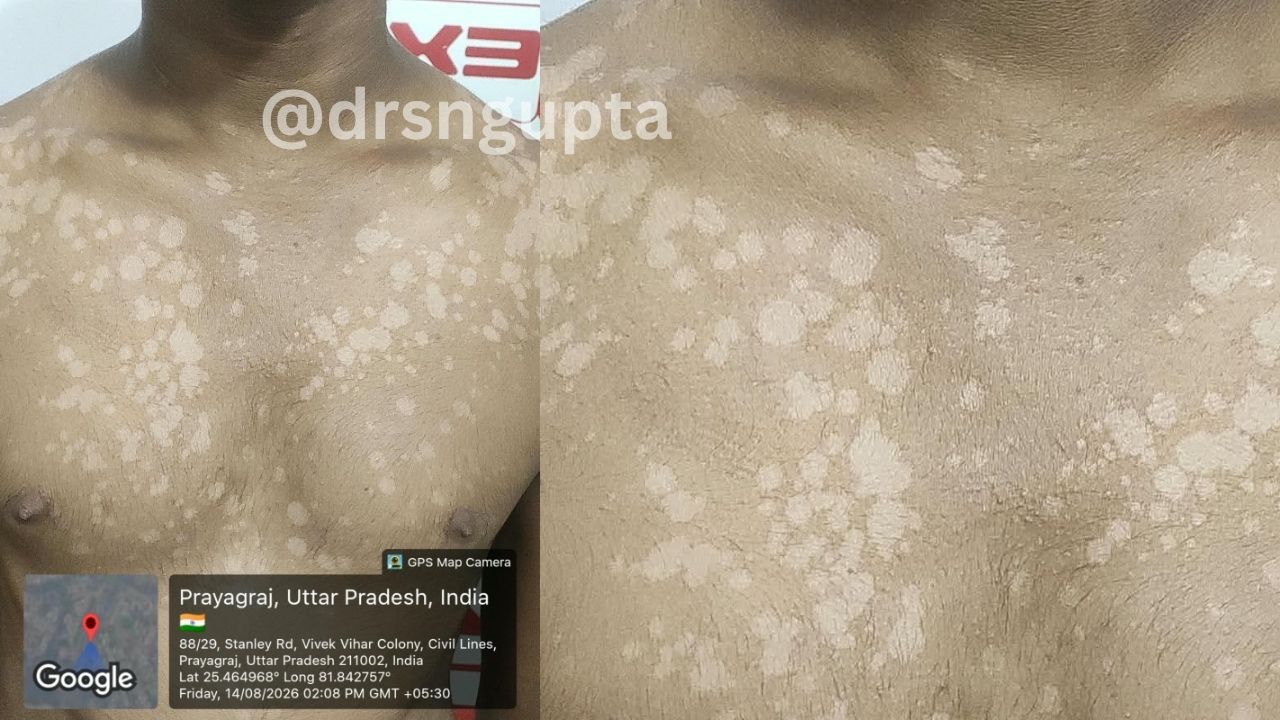
The most prominent symptom of pityriasis versicolor is the sudden appearance of spots or patches on the skin.
Visual Characteristics:
- Multiple Colors: The patches can look pink, pale white, tan, reddish-brown, or dark brown. Because the name means “changing color,” a single person can have patches of various shades.
- Fine Scaling: The surface of the patches often features a very subtle, powdery, or fine, dry scale when scratched gently.
- Failure to Tan: One of the most common reasons people notice the condition is that the affected patches fail to tan when exposed to the sun, making them stand out starkly against surrounding tanned skin.
- Mild Itching: Most patches are entirely asymptomatic, though some individuals experience mild, persistent itching, especially when overheated or sweating.
Common Locations on the Body
- The upper back and chest (the most frequent sites due to high density of oil glands)
- Shoulders and upper arms
- The neck
- The abdomen
- Rarely, it can appear on the face in children.
Pityriasis Versicolor vs. Other Skin Conditions
Because pityriasis versicolor alters skin pigmentation, it is frequently mistaken for other dermatological conditions. An accurate diagnosis by a healthcare professional is essential to ensure proper treatment. Conditions that mimic it include:
- Vitiligo: An autoimmune condition causing patches of skin to lose their pigment entirely. Unlike pityriasis versicolor, vitiligo patches lack scaling and have sharp, depigmented borders.
- Post-Inflammatory Hyperpigmentation or Hypopigmentation: Discoloration left behind after eczema, acne, or skin trauma.
- Pityriasis Rosea: A rash that features a distinct “herald patch” followed by smaller oval spots, usually arranged in a Christmas-tree pattern on the trunk.
- Eczema (Atopic Dermatitis) or Seborrheic Dermatitis: Both involve dry, itchy, inflamed skin, but they possess distinct histological features.
Professional Medical Diagnosis
Diagnosing pityriasis versicolor is usually straightforward for a board-certified dermatologist.
- Clinical Inspection: A doctor can often identify the condition simply by looking at the characteristic distribution, color variation, and fine scale of the patches.
- Wood’s Lamp Examination: The doctor may shine a specialized ultraviolet (black) light on the skin. Under a Wood’s lamp, pityriasis versicolor lesions often emit a copper-orange fluorescence.
- Skin Scraping (KOH Prep): If there is any doubt, the doctor gently scrapes a tiny sample of skin scales onto a glass slide, treats it with a potassium hydroxide (KOH) solution, and examines it under a microscope. Seeing the classic “spaghetti and meatballs” pattern of yeast spores and fungal hyphae confirms the diagnosis.
Treatment Options: Clearing the Infection
Treating pityriasis versicolor involves killing the excess Malassezia yeast and restoring normal skin balance. Depending on the severity of the outbreak, doctors typically recommend topical or oral medications:
1. Over-the-Counter (OTC) Topical Treatments
For mild or localized outbreaks, medicated shampoos, cleansers, or creams applied directly to the skin are highly effective. Key active ingredients include:
- Selenium Sulfide (e.g., Selsun Blue shampoo)
- Ketoconazole (e.g., Nizoral anti-dandruff shampoo or cream)
- Zinc Pyrithione
- Clotrimazole or Miconazole creams
Application Tip: When using anti-fungal shampoos as body washes, lather the product over the affected areas and let it sit on the skin for 5 to 10 minutes before rinsing off to allow the medication time to target the yeast.
2. Prescription Topical Medications
If OTC washes fail, a dermatologist can prescribe stronger topical anti-fungal creams or solutions (such as prescription-strength ketoconazole or ciclopirox).
3. Oral Anti-Fungal Medications
For widespread, severe, or recurrent cases that do not respond to topical treatments, a dermatologist may prescribe a short course of oral anti-fungal pills (such as fluconazole or itraconazole). Because oral medications travel through the bloodstream to the skin, they clear stubborn infections quickly.
Why Do Skin Discolorations Linger After Treatment?
A common point of confusion for patients is that even after the fungus is completely dead and gone, the skin color does not return to normal immediately.
The Malassezia yeast produces a natural acid that interferes with the skin’s melanocytes (the cells responsible for skin pigment), causing either light spots (hypopigmentation) or dark spots (hyperpigmentation). Once the yeast is eliminated, your skin needs time to regenerate and produce normal melanin. This pigment recovery process can take weeks to several months, especially after sun exposure. Do not assume the treatment failed just because the color hasn’t normalized overnight!
Prevention and Long-Term Maintenance
Pityriasis versicolor has a frustrating tendency to recur, especially if you live in a hot, humid climate or are naturally prone to oily skin. You can dramatically reduce future outbreaks with these preventive steps:
- Use Maintenance Washes: If you get frequent recurrences, use an anti-fungal shampoo (like ketoconazole or selenium sulfide) as a body wash once a week or a couple of times a month, leaving it on for 5 minutes before showering.
- Stay Dry and Cool: Wear loose-fitting, breathable clothing made of natural fibers like cotton. Change out of sweaty workout clothes or wet swimsuits immediately.
- Manage Sweating: If you work out or live in high heat, keep your skin clean and dry. Avoid heavy, oil-based skin lotions that can trap moisture and feed the yeast.
- Sun Protection: While tanning won’t cause the fungus directly, it makes the unpigmented spots stand out much more prominently against tanned skin. Broad-spectrum sunscreen helps minimize contrast.
When to See a Dermatologist
Schedule an appointment with a healthcare professional if:
- Your rash covers a large portion of your body and does not improve after two weeks of OTC anti-fungal treatment.
- The itching becomes severe or uncomfortable.
- Outbreaks keep returning repeatedly despite home care.
- You are uncertain of the diagnosis and want to rule out other skin conditions.
Frequently Asked Questions (FAQs)
Is pityriasis versicolor contagious?
No. Pityriasis versicolor is not contagious. It cannot be caught from another person, nor can you spread it to family members through skin-to-skin contact, sharing towels, or washing machines. The condition is simply caused by an overgrowth of yeast that already lives naturally on everyone’s skin.
Can diet cause pityriasis versicolor?
There is no strong clinical evidence linking specific foods directly to pityriasis versicolor. However, maintaining overall health and supporting your immune system through a balanced diet is always beneficial for skin health.
Why does pityriasis versicolor keep coming back?
Because Malassezia yeast is a permanent, natural resident of human skin, it can easily multiply again whenever environmental conditions (like heat, humidity, or heavy sweating) become favorable. Preventive maintenance washes are often required for individuals prone to chronic flare-ups.
The Takeaway
Pityriasis versicolor is a common, harmless, and completely manageable fungal skin condition. While the resulting skin discoloration can be annoying, it poses no long-term threat to your health. With the right over-the-counter or prescription anti-fungal treatments—paired with proactive summer maintenance—you can clear the infection and restore your skin’s even tone. If stubborn patches refuse to clear, partner with a board-certified dermatologist for a personalized, effective treatment plan.

Dr. S. N. Gupta is a renowned skin specialist and dermatologist in Prayagraj, with extensive experience in diagnosing and treating various skin, hair, nail and Sexually Transmitted Diseases conditions for last 28 years. Address Shree Balaji Medical Traffic Chauraha, Rajapur Prayagraj Mob 9415613743