Book Appointment Now
Female Androgenetic Alopecia (Female Pattern Hair Loss): Comprehensive Guide to Causes, Diagnosis, and Advanced Treatments
Hair loss is widely and incorrectly stereotyped as an exclusively male struggle. In reality, millions of women quietly battle a progressive, distressing form of hair thinning known medically as female androgenetic alopecia (FPHL) or female pattern hair loss.
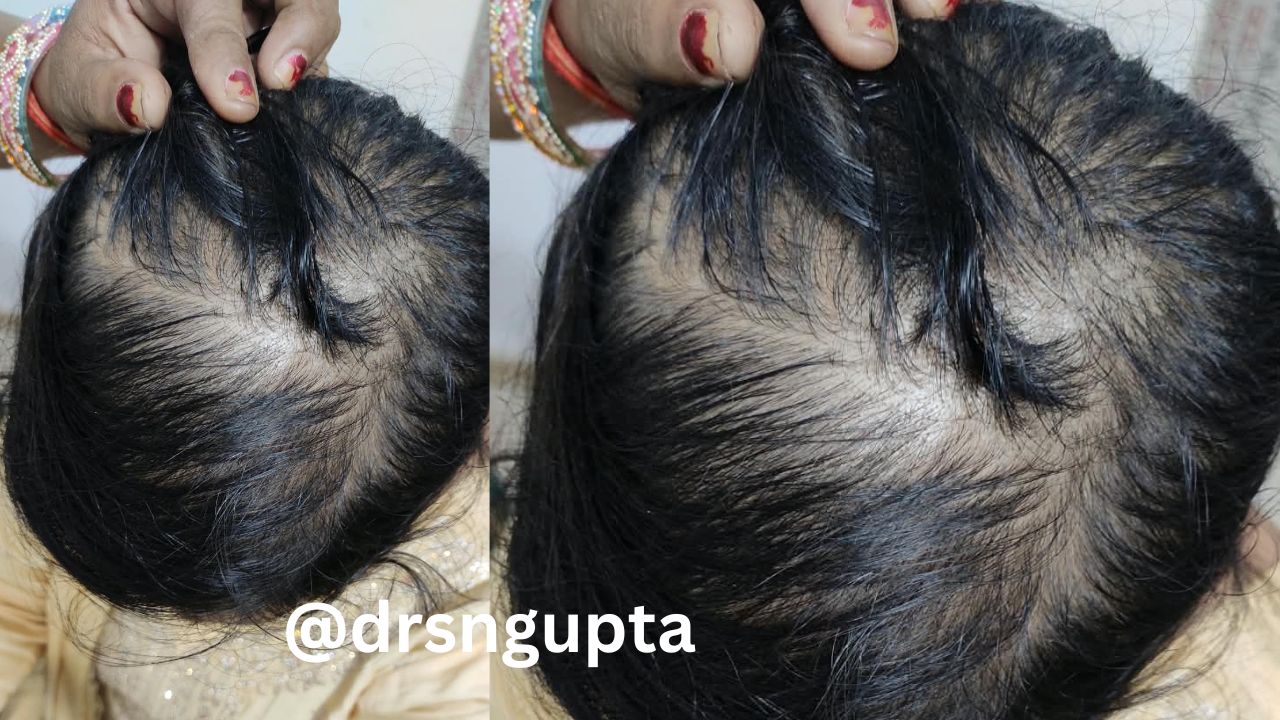
Unlike the receding hairlines and total vertex baldness typical in men, female pattern hair loss presents uniquely, often beginning with a widening central parting while preserving the front hairline. Because hair is deeply tied to identity and social presentation, understanding the root biology of FPHL and exploring modern, evidence-based interventions is vital for restoring both hair density and self-confidence.
What is Female Androgenetic Alopecia?
Female androgenetic alopecia is a chronic, progressive, non-scarring form of hair thinning. It is driven by a combination of genetic predisposition and hormonal influences.
At the microscopic level, FPHL triggers a process called follicular miniaturization. Over successive hair growth cycles, the growth phase (anagen) shortens, and hair follicles shrink. Instead of producing thick, pigmented terminal hairs, the follicles begin producing fine, wispy, unpigmented vellus hairs. Over time, hair density decreases significantly across the top and crown of the scalp.
Key Features of FPHL:
- Preserved Frontal Hairline: Unlike men, women rarely experience a completely receding hairline; the frontal border is almost always maintained.
- Widening Part: The most common early sign is a widening of the natural hair part, sometimes referred to clinically as a “Christmas tree” pattern.
- Diffuse Central Thinning: Thinning is generally spread diffusely across the crown and top of the head rather than forming isolated, clean-cut bald spots.
Why Female Hair Loss Differs from Male Pattern Baldness
While both conditions share the umbrella term “androgenetic alopecia,” female pattern hair loss differs fundamentally in its hormonal landscape, presentation, and clinical management.
- Hormonal Complexity: While men’s hair loss is primarily driven by high levels of dihydrotestosterone (DHT), female hair loss involves a much more complex interplay of androgens, estrogen fluctuations, thyroid health, and iron storage (ferritin). Many women with FPHL have normal blood levels of circulating androgens, suggesting that their scalp follicles possess a higher localized sensitivity to normal hormone levels.
- The Impact of Life Stages: FPHL can manifest at any time following puberty, but its prevalence spikes significantly during periods of major hormonal transition, such as postpartum recovery, polycystic ovary syndrome (PCOS), and perimenopause or postmenopause.
Staging Hair Loss: The Ludwig Classification
Dermatologists use the Ludwig Scale to grade the severity of female pattern hair loss, which ranges from mild to extensive:
- Grade I (Mild): Early thinning on the crown of the head. The condition can often still be easily concealed by styling or altering the hair parting.
- Grade II (Moderate): Noticeable widening of the central part and a clear reduction in hair volume and density across the top of the scalp.
- Grade III (Severe): Extensive thinning resulting in a see-through, sparse appearance across the entire crown. Total baldness is exceedingly rare in women.
Proven Medical Treatments for FPHL
Because FPHL is a progressive condition, early intervention is critical. Once a hair follicle has completely miniaturized and gone dormant, medical therapy alone cannot revive it. Modern dermatology relies on a multi-targeted approach to halt shedding and stimulate regrowth.
1. Topical Minoxidil
- The Gold Standard Foundation: Available over-the-counter as a 2% solution or 5% foam, topical minoxidil remains the only FDA-approved medication specifically indicated for female pattern hair loss.
- Mechanism: It acts as a vasodilator, opening potassium channels and prolonging the anagen (growth) phase while increasing nutrient delivery to miniaturized follicles. Consistent daily application yields visible improvements in density for a large percentage of women, though results require at least 3 to 6 months of patience.
2. Anti-Androgen Therapy (Off-Label Prescriptions)
For women whose hair loss is driven or accelerated by hormonal imbalances (such as PCOS), dermatologists frequently prescribe systemic anti-androgens:
- Spironolactone: An oral medication that acts as an aldosterone receptor antagonist and mild anti-androgen, blocking androgens from binding to hair follicles. It is frequently paired with minoxidil to create a powerful synergistic treatment protocol.
- Finasteride and Dutasteride: While standard 5-alpha-reductase inhibitors are widely used by men, they are strictly prescribed off-label for postmenopausal women only due to severe teratogenic risks (risk of birth defects in male fetuses) for women of childbearing age.
3. Low-Dose Oral Minoxidil (LDOM)
An emerging mainstream option gaining significant clinical traction is low-dose oral minoxidil (typically ranging from 0.25 mg to 2.5 mg daily for women). For patients who experience skin irritation from topical solutions or struggle with daily compliance, LDOM offers a convenient systemic alternative with robust efficacy profiles.
Regenerative and Procedural Options
When topical and oral medications need a performance boost—or for patients seeking alternatives to daily pills—regenerative therapies offer exciting pathways:
- Platelet-Rich Plasma (PRP) Therapy: PRP involves drawing a small amount of the patient’s blood, spinning it in a centrifuge to isolate growth factors, and injecting the concentrated plasma directly into thinning areas of the scalp. PRP stimulates vascularization and extends the growth cycle of weakened follicles.
- Low-Level Laser Therapy (LLLT): FDA-cleared laser caps, bands, and combs use specific wavelengths of light to enhance cellular respiration and mitochondrial energy within hair roots, reducing inflammation and supporting overall density when used alongside medical therapy.
Psychological Support and Coping Strategies
Society places an immense cultural emphasis on hair as a core symbol of a woman’s femininity and youth. Consequently, coping with female pattern hair loss can trigger significant psychological distress, anxiety, and social self-consciousness.
- Rule Out Mimicking Conditions: Always consult a board-certified dermatologist to rule out reversible causes of hair shedding, such as iron deficiency anemia, thyroid disorders, or acute telogen effluvium.
- Cosmetic Camouflage: Advanced options—including specialized volumizing hair fibers, scalp micropigmentation (SMP), high-quality human hair toppers, and custom wigs—can restore immediate visual confidence while medical treatments take effect.
Conclusion
Female androgenetic alopecia is a common, manageable biological reality rather than an irreversible fate. By understanding the unique presentation of FPHL, recognizing early signs of widening parts, and partnering with an experienced dermatologist to build a tailored treatment plan combining minoxidil, anti-androgens, or regenerative care, women can successfully preserve their hair and reclaim their peace of mind.

Dr. S. N. Gupta is a renowned skin specialist and dermatologist in Prayagraj, with extensive experience in diagnosing and treating various skin, hair, nail and Sexually Transmitted Diseases conditions for last 28 years. Address Shree Balaji Medical Traffic Chauraha, Rajapur Prayagraj Mob 9415613743