Book Appointment Now
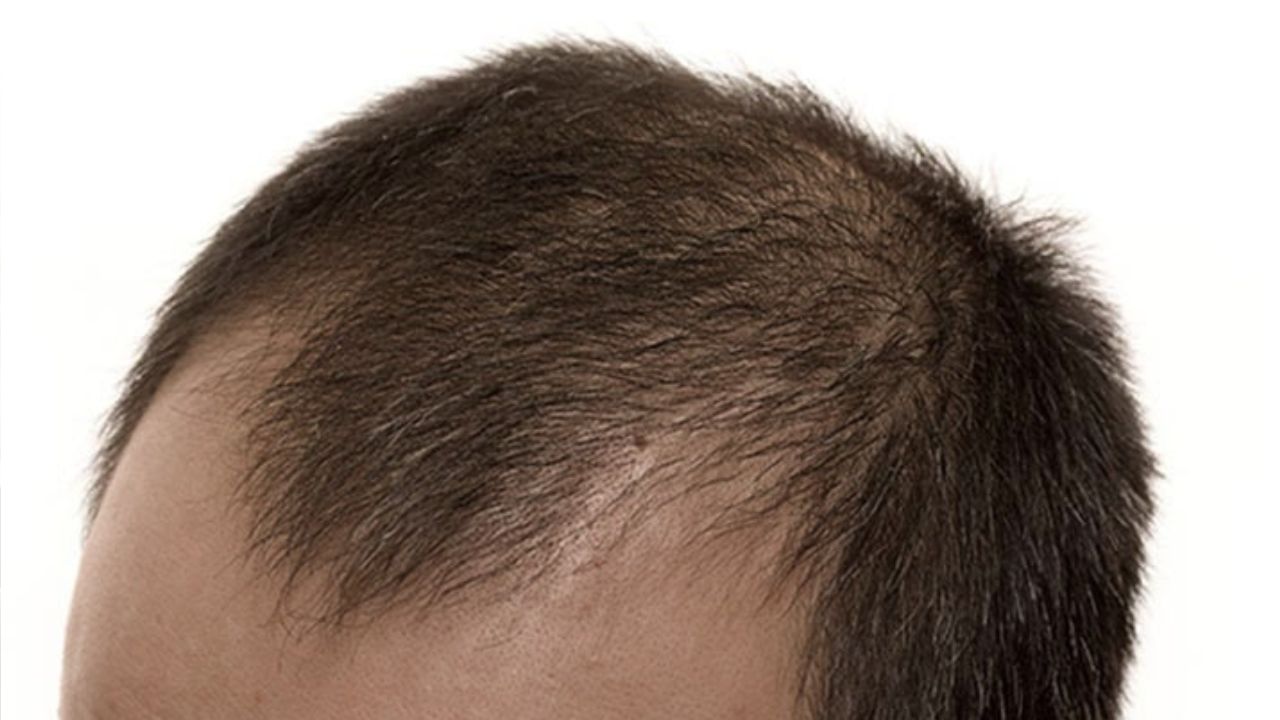
Demystifying Male Androgenetic Alopecia: Causes, Clinical Stages, and Advanced Management
Male Androgenetic Alopecia: Causes, Stages & Best Treatments
Male pattern baldness—clinically known as androgenetic alopecia (AGA)—is the most common cause of hair loss worldwide. Affecting up to 50% of men by the age of 50, it is a progressive condition that can profoundly impact a man’s confidence, self-image, and psychological well-being.
While centuries of old-wives’ tales have blamed everything from wearing hats to poor circulation, modern medical science has uncovered the exact genetic and hormonal mechanics driving hair thinning. Understanding these pathways is the first step toward effective, evidence-based management and long-term hair preservation.
What is Male Androgenetic Alopecia?
Androgenetic alopecia is a genetically predetermined disorder characterized by the gradual miniaturization of hair follicles on the scalp. Unlike telogen effluvium—a sudden, diffuse shedding often triggered by stress or illness—AGA follows a distinct, predictable pattern of recession and thinning.
The condition does not happen overnight. Instead, it is driven by a continuous process known as follicular miniaturization. Over successive hair growth cycles, the growth phase (anagen) shortens, and the resting phase (telogen) lengthens. Consequently, each new hair strand grows finer, shorter, and lighter than the last, eventually transforming thick terminal hairs into barely visible, unpigmented vellus hairs before the follicle finally goes dormant.
The Biological Culprit: Understanding DHT
To understand why androgenetic alopecia happens, one must look at hormones and genetics.
- Testosterone and 5-Alpha-Reductase: Testosterone is a primary male sex hormone. An enzyme called 5-alpha-reductase (5-AR), which is particularly abundant in scalp hair follicles and oil glands, acts on testosterone to convert it into a much more potent androgen: dihydrotestosterone (DHT).
- Receptor Sensitivity: Not all men lose their hair, even though all men have testosterone and DHT. The key variable is genetic predisposition. Men with AGA inherit hair follicles that possess hypersensitive androgen receptors.
- The Cellular Impact: When DHT binds to these sensitive receptors in scalp follicles, it triggers a cellular signaling cascade that represses genes responsible for normal hair growth. The blood supply to the follicle diminishes, the growth cycle shrinks, and miniaturization begins.
Interestingly, the sensitivity to DHT varies by region on the scalp. Follicles at the temples, crown, and hairline are highly sensitive, whereas hair follicles on the back and sides of the head (the “donor area”) are genetically immune to DHT—a principle that makes modern hair transplantation possible.
Staging Hair Loss: The Norwood Scale
Dermatologists and hair restoration specialists use the Norwood Scale to classify the progression of male androgenetic alopecia. Ranging from Stage 1 to Stage 7, this scale helps track the severity of hair loss and evaluate treatment responses:
- Stage 1: Minimal or no recession of the hairline.
- Stage 2: Slight recession around the temples (the mature hairline).
- Stage 3: Deepening recession at the temples, forming characteristic “M” or “U” shaped gaps. Hair thinning may also begin on the crown (vertex).
- Stage 4: Further recession at the temples accompanied by a prominent, expanding bald spot on the crown, separated by a band of moderate hair.
- Stage 5 & 6: The bridge of hair separating the temples and the crown grows progressively narrower and sparser until the two areas merge into a single large expanse of hair loss.
- Stage 7: The most advanced stage, where only a narrow horseshoe-shaped band of hair remains around the sides and back of the head.
Proven Medical Treatments
While androgenetic alopecia is a chronic, progressive condition, early intervention can successfully halt its advance and, in many cases, stimulate substantial regrowth.
1. 5-Alpha-Reductase Inhibitors (Oral and Topical)
- Finasteride: Taken orally as a daily 1mg tablet, finasteride blocks the Type II 5-alpha-reductase enzyme, reducing serum DHT levels by approximately 70% and scalp DHT levels significantly. It is the gold standard for halting the progression of AGA and often triggers visible regrowth on the crown and mid-scalp.
- Dutasteride: A more potent inhibitor that blocks both Type I and Type II 5-alpha-reductase enzymes. Though frequently prescribed off-label for AGA, it drastically reduces DHT and has shown superior density improvements in clinical studies.
2. Vasodilators and Growth Stimulants
- Minoxidil: Available as a topical solution, foam, or low-dose oral pill, minoxidil acts as a potassium channel opener and vasodilator. While its exact mechanism on hair is complex, it prolongs the anagen growth phase and enlarges miniaturized follicles by increasing nutrient-rich blood flow to the scalp. It is commonly used synergistically with 5-alpha-reductase inhibitors.
3. Adjunctive Therapies
- Low-Level Laser Therapy (LLLT): Utilizing medical-grade laser caps or bands, photobiomodulation stimulates cellular respiration and mitochondrial energy production within weak hair follicles, reducing inflammation and supporting growth cycles.
- Platelet-Rich Plasma (PRP) Therapy: Involves drawing a patient’s blood, spinning it down to concentrate growth factors, and injecting the platelet-rich plasma directly into thinning areas of the scalp to revitalize dormant follicular units.
Surgical Options: Hair Transplantation
For men who have advanced past the point of medical reversal—or those looking to restore a defined hairline—surgical hair restoration offers a permanent, natural-looking solution.
- Follicular Unit Extraction (FUE): Individual follicular units are extracted directly from the genetically resistant donor zone at the back and sides of the head using precision micro-punches, then meticulously implanted into thinning recipient zones.
- Follicular Unit Transplantation (FUT): A strip of scalp tissue is surgically removed from the donor area, dissected under microscopes into individual grafts, and placed into thinning regions.
Advances in surgical artistry ensure that modern transplants avoid the outdated “pluggy” look, offering dense, undetectable hairlines that mimic natural growth patterns.
Psychological Coping and Self-Care
Coping with male pattern baldness can trigger anxiety, lower self-confidence, and create body image issues, particularly given societal pressures surrounding youth and appearance.
- Reframing the Narrative: Many men find psychological relief by leaning into the change—adopting a clean-shaven or short cropped look that completely eliminates the visual contrast of receding hair.
- Open Dialogue: Speaking with peers, joining support groups, or consulting dermatologists can dispel misinformation and ground expectations in clinical reality.
- Consulting Early: The single most important factor in managing AGA is timing. Treatments work best when initiated at the earliest signs of miniaturization, long before the follicle has completely shut down.
Hormonal triggers like DHT
Male androgenetic alopecia is a natural genetic blueprint, but it no longer has to be an inevitable fate. Driven by a clear understanding of hormonal triggers like DHT, modern dermatology offers an array of powerful tools—from preventative oral medications and topicals to advanced surgical restoration. By acting early and consulting with a qualified hair restoration expert or dermatologist, men can effectively preserve their hair, protect their scalp health, and maintain their confidence for decades to come.

Dr. S. N. Gupta is a renowned skin specialist and dermatologist in Prayagraj, with extensive experience in diagnosing and treating various skin, hair, nail and Sexually Transmitted Diseases conditions for last 28 years. Address Shree Balaji Medical Traffic Chauraha, Rajapur Prayagraj Mob 9415613743